Employee self-service: tweak the rota with one click
You are buried in annual leave requests, shifts are being swapped by word of mouth and working hours need to be corrected after the fact. This situation is both stressful and time-consuming. Give employees control over their scheduling with the employee self-service module in our workforce management solution ZESAM – straightforward, mobile and efficient. From time recording and leave requests to shift swaps, access all the features via intuitive web apps – on your desktop, tablet or smartphone. At the same time, managers can benefit from greater transparency, fewer questions and clear overviews of absences, time accounts and plans. The role-specific interface ensures you can only see or do what is necessary for your role.
How teams and managers benefit from self-service
-
Everything in one portal: log times, input desired deployments, apply for leave, swap shifts – central, intuitive and always accessible.
-
Leave requests with second choices: employees can input their desired dates, plus alternative options. Planners decide flexibly based on capacity.
-
Shift requests and availabilities: one-off or recurring employee requests are automatically considered during scheduling.
-
Instant-access plans and evaluations: weekly plans, journals and reports can be downloaded digitally 24/7 – by HR and employees.
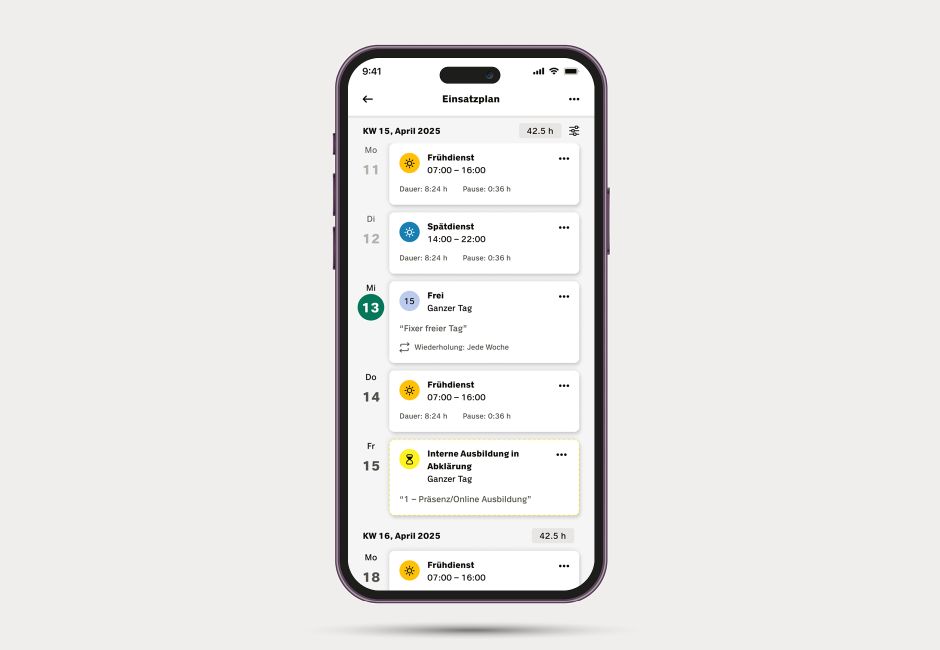 Employee rota
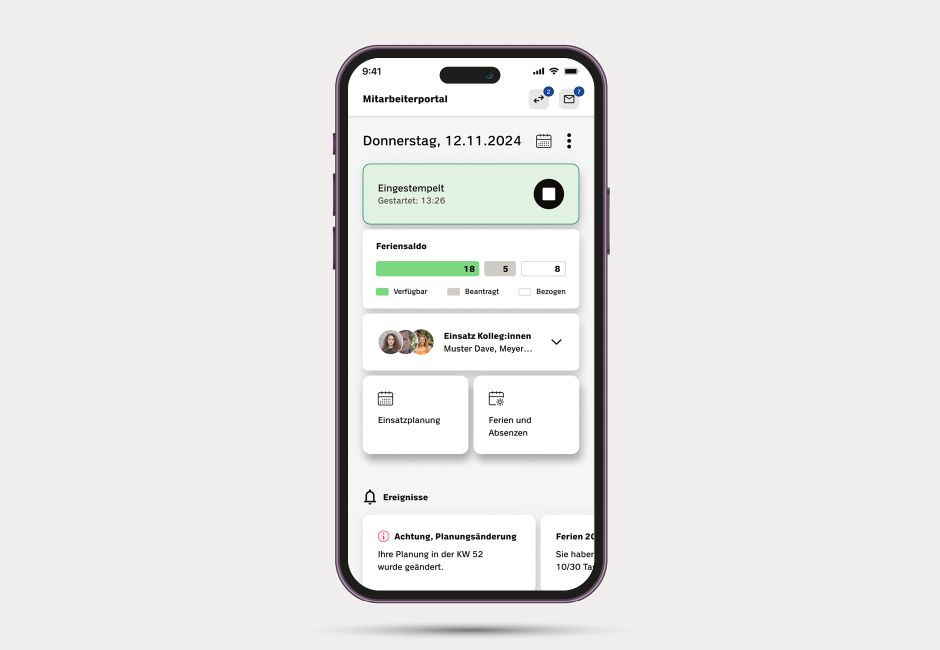 Employee portal
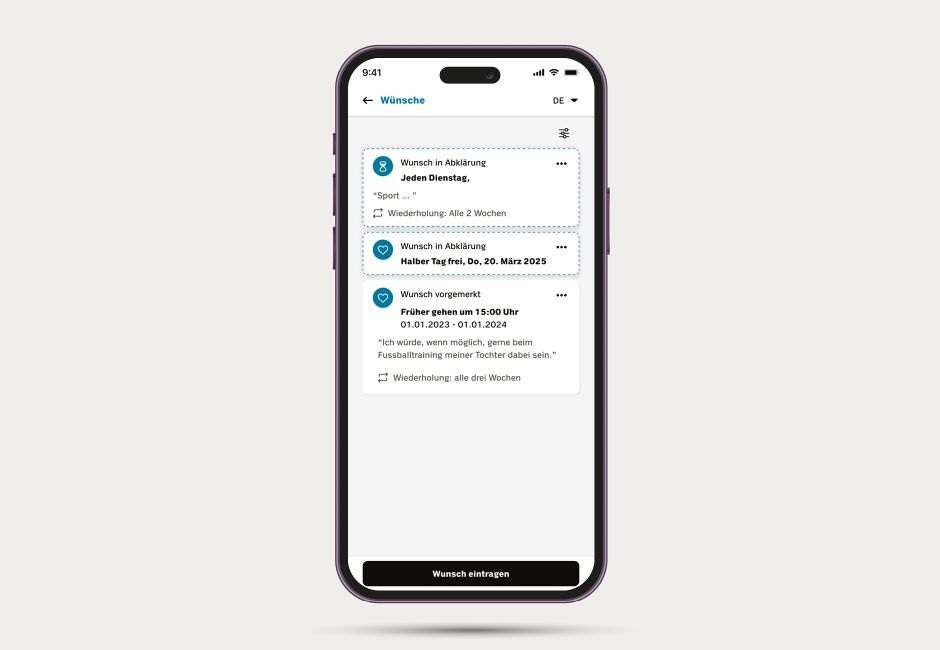 Employee availability requests
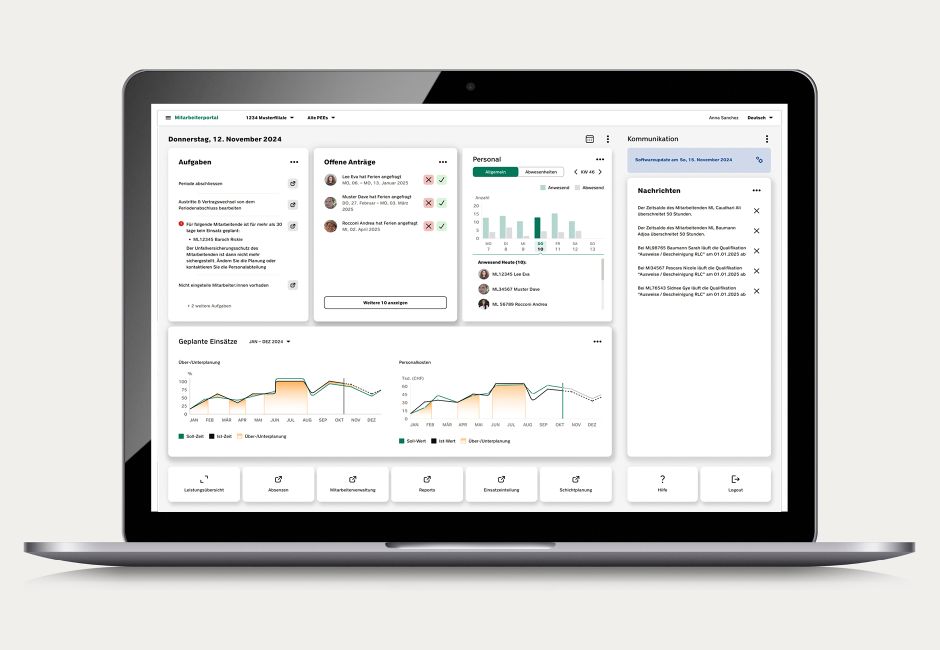 Manager dashboard


More independence – less admin
With employee self-service, you can simplify processes, lighten the load on HR and boost employee satisfaction.
Get in touch nowOther modules




FAQ
Employee self-service puts recurring HR processes directly in the hands of employees and managers. These FAQs look at how digital self-service tools simplify administrative processes, promote transparency and speed up access to work-related information.
What is employee self-service?
Employee self-service refers to digital functions that let employees carry out administrative tasks themselves, such as recording working hours, requesting holiday or viewing rosters. This involves employees and managers directly in recurring HR processes, while easing the burden on HR and planning teams.
How does employee self-service ease the burden on HR teams day to day?
Employee self-service eases the burden on HR teams because employees can handle many standard tasks themselves. With ZESAM, for example, employees can record working hours, report absences, maintain availability and shift preferences, or view rosters. This reduces queries and manual administrative work.
Which tasks can employees carry out themselves in employee self-service?
Depending on the modules in use, employees can use ZESAM to record working hours, request holiday and other absences, submit availability and shift preferences, view rosters, or initiate shift swaps. These functions are available both online and on mobile.
When is employee self-service worthwhile for companies?
Employee self-service is particularly worthwhile when a large number of administrative queries arise, or when employees need flexible access to information on shifts, time and absences. With ZESAM, employees are involved directly in standardised processes. This eases the burden on HR, managers and planners.
Glossary
Digital self-service processes strengthen employees' ownership of their own data while easing the burden on HR and management teams. This glossary explains key concepts relating to role-based use, mobile interaction and process automation.
Web apps
Web apps are applications used via a browser and generally do not require local installation. In employee self-service, they provide access to functions from a desktop, tablet or smartphone.
Role-specific interface
A role-specific interface displays functions, information and actions according to the individual user's role and permissions. This means employees, managers, planners or HR staff only see the content relevant to their tasks.
Time accounts
Time accounts reflect evaluated time values and balances, such as flexitime, overtime, holiday entitlement or other allowances. They show how recorded and evaluated time develops in relation to target, contractual or entitlement values.
Journals
Journals are structured, chronological overviews of entries, balances, absences or other time management information. They help employees and managers track recorded and evaluated data for a specific period.