Lifestyle banking – recognising opportunities, shaping change
18.12.2025
 Rino Borini, Entrepreneur, Scarossa, Digital Finance
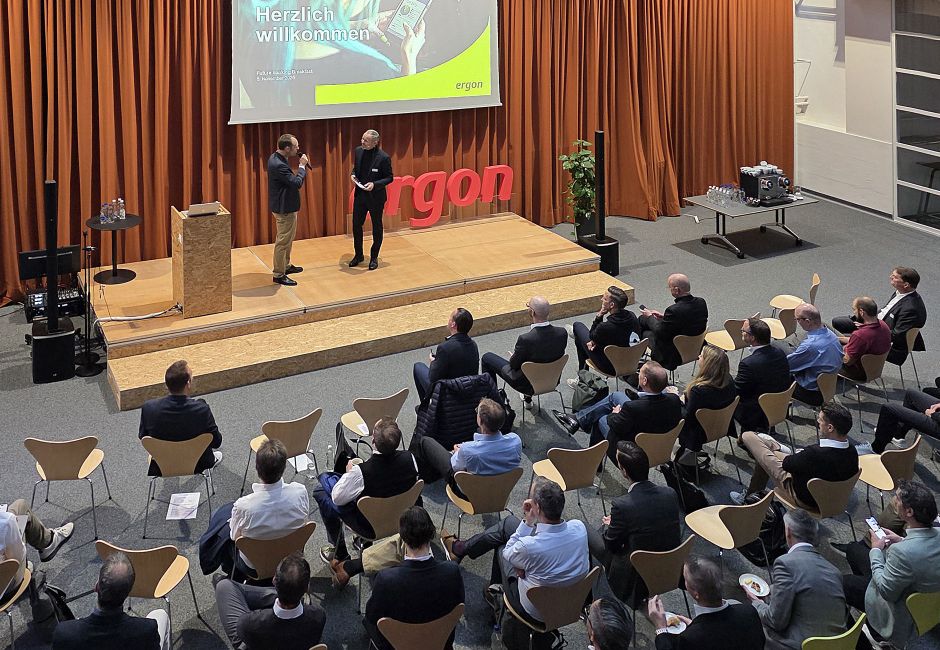 Rino Borini, Entrepreneur, Scarossa, Digital Finance und Adrian Berger, MD Finance & Telecom Solutions, Ergon
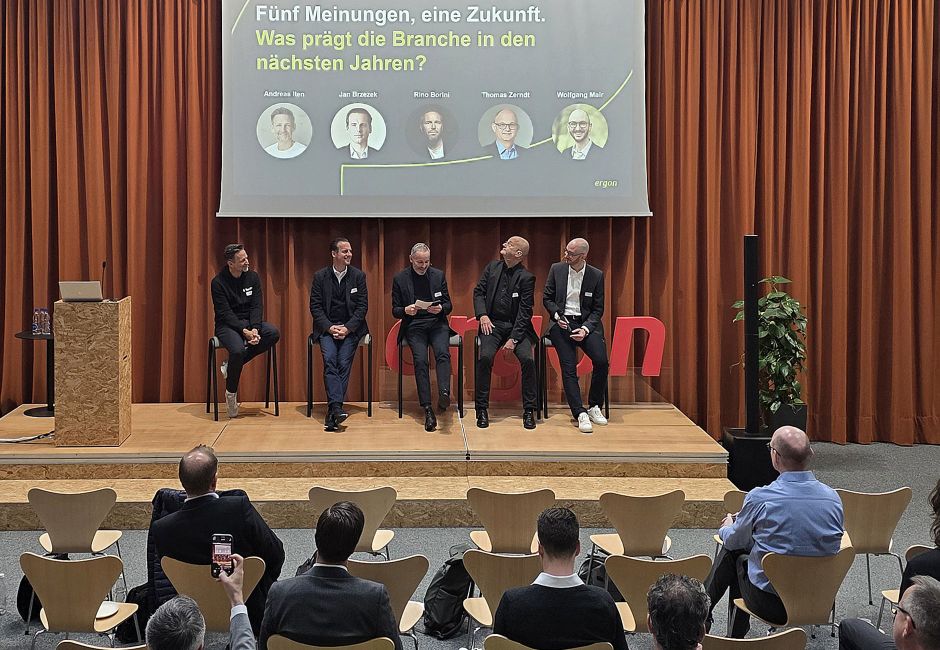 Podiumsgespräch: die Referierenden präsentieren ihre Vision für die Zukunft des Bankings
Banking reimagined: the role of lifestyle banking
At Ergon's Future Finance Breakfast, Rino Borini showed how lifestyle banking is changing the financial industry: if you want to inspire lasting enthusiasm among your customers, you have to rethink banking – making it simple, personal and connected. Today's hybrid customers demand not only seamless digital services, but also individual advice. Traditional main bank models are losing importance, while open banking, crypto offerings and platform-based ecosystems are becoming the norm.
Rino Borini also points out that customers are not asking for "open banking" as a concept, but expect specific functions that make their everyday lives easier. Successful solutions abroad show that added value is created when banks link data in a meaningful way and offer user-centred features – rather than simply fulfilling a regulatory obligation.
At the same time, Borini acknowledges that the Swiss banking landscape is lagging behind in terms of innovation: many institutions are stuck in old models, focusing too heavily on the 50+ generation and running the risk of becoming "senior banks" – while younger target groups have long since taken their financial decisions elsewhere.
Convenience and innovation in everyday life
A practical example illustrates the change: sending money abroad in a matter of seconds and using it easily in any currency – modern tools such as Revolut and Monzo make this possible and focus on convenience, flexibility and self-service. At the same time, we are seeing challenger banks challenging traditional players with simple but smart features. Those who focus on only one target group run the risk of missing out on new generations and their expectations.
The change is also clearly visible at the customer interface. Financial influencers such as Finanzfabio and MissFinance reach a larger audience on Instagram and Spotify than the five largest banks combined. In addition, the Swiss market lacks basic digital functions such as budget apps, mortgage cockpits and integrated financial overviews. International providers are increasingly exploiting this gap.
The future remains hybrid: digital and personal
Everyday tasks are digital and automated, while complex issues and major financial decisions require trusted advisors – supported by artificial intelligence. Openness to digital ecosystems, the courage to embrace new business models and continuous learning will determine who will be among the winners tomorrow. According to Borini, AI in particular will become the "second brain" of consulting. Swiss banks have so far made little use of this potential.
Another key point: tokenisation, programmable money and a strong Swiss franc stablecoin will become strategic building blocks for the future of payment transactions. If AI agents are to execute transactions autonomously in the future, digital, programmable currency will be needed – an area in which Switzerland must act quickly.
Or, as Rino Borini puts it: "You can't be a swimmer if you don't get in the pool."